Montag, 30. Mai 2011
Near Nadir from Mark Nauseef, Ikue Mori, Bill Laswell, Evan Parker "announced"
Just the other day Heung-Heung Chin (aka Chippy) tzadik's great artwork designer posted this album cover on her facebook page and tweeted about it.
As of now there's no update on tzadik.com officially announcing it, but the line up itself is enough for me to be really excited. Seems to part of the Key series. Chippy's design looks great and I'm sure the music itself will at least equal that.
Montag, 11. April 2011
The Kilimanjaro Darkjazz Ensemble - From the Stairwell
A seductive beauty lingers in the shadows. She whispers softly in your ears and you cannot resist. You follow her as she walks up those stairs. Carefully watching her every step..
"From the Stairwell" is one of those definite inner cinema albums. It's all about the atmosphere, soundscapes and a sensuality that sounds, in lack of a more original word, feminine.
It's important to clarify that there are dozens of different moods, not all dark, neither is everything lush and exoctic. "From the Stairwell" really is a subtle rollercoaster, but a rollercoaster nevertheless. What unifies all the moods and holds the album as a whole together is the great musicianship and pure beauty of the sounds they produce.
The overall flow is so tightly woven, it's hard to understand how there still can be any dynamic at all. But with a rollercoaster, of course there's dynamic. Moods shift form and shape, instruments float in and out of the music. Sometimes the instrumental bleakness is worthy of the darkest of nights. Then Charlotte's voice appears out of nowhere, replacing the bleakness with beauty and melancholy. Sometimes leading and singing lyrics but never trying to outshine the other musicians. As a logical consequence her voice blends in as just another instrument in the mist on tracks like "Giallo".
Words are just another tool to convey the poetry that is the music of "The Kilimanjaro Darkjazz Ensemble". "From the Stairwell" is never a "vocal jazz" record. A much better label would be "journey jazz" or "mood jazz". And that still wouldn't do this music justice. The range in moods is also matched by the range in styles. One moment you'll hear influences from the "Kava Kon" remix collaboration from 2009 in form of an exotica style touch (On "Giallo" and "Les Étoiles Mutantes" for example). The next moment you'll hear dark ambient soundscapes with plucked basslines straight out of Agent Dale Cooper's journey into the "Black Lodge" (On "Past Midnight"). The finale of "Celladoor" is every trip hop producer's dream of brass instrumentation and beats climaxing, albeit with an organic jazz drum sound.
With a duration of one hour and two minutes spread across eight tracks there's a lot to dive right in and enjoy.
Though I mentioned a few song names it's hard to pick any standout tracks really. What we have here is one piece of work. Of course you will prefer some tracks over others, but I really can't see why someone would reject to take the whole one hour long journey with The Kilimanjaro Darkjazz Ensemble.
This is a band that really grew to become one of the finest European bands in my book. "From the Stairwell" is a perfect ten. A sure recommendation for everyone reading this.
cd time: 1:02:43
Personnel:
Gideon Kiers : Beats / FX
Jason Köhnen : Double Bass / Fretless
Hilary Jeffery : Trombone / OscillatorCharlotte Cegarra : Vocal FX /Various instruments
Eelco Bosman : Guitar
Sadie Anderson : Violin
Nina Hitz : Cello
Standout tracks:
All of them. Again. I'm not lazy. The music's just too good.
links:
Labels:
2011,
atmospheric,
cello,
electronic,
guitar,
instrumental,
jazz,
melancholic,
review,
soundscapes,
The Kilimanjaro Darkjazz Ensemble,
trumpet
Mittwoch, 26. Januar 2011
New John Zorn albums for 2011 announced
A few days ago the Tzadik site got updated. Here's the most interesting part to me (besides the Ikue Mori DVD):
John Zorn: Nova Express [#7389]
Following up on seeds first planted in the depths of the Interzone conspiracy, Nova Express combines the quirky atonal lyricism of Zorn's classical music with the cut up techniques of Naked City and the intimate virtuosity of the Masada songbook. Scored for a modern jazz quartet of vibes, piano, bass and drums, these episodic, dynamic and moody compositions feature some of Zorn's strongest writing. Performed by an all-star group of four downtown masters, this is an exciting new sound from the world of John Zorn. Modern chamber music filled with beautiful details and dramatic passions composed and conducted by our East Village musical
alchemist.
John Zorn: The Satyr's Play - Cerberus [#7390]
Two dramatic new worlds in sound from our downtown Alchemist who continues to confound and defy expectations well into his fourth decade of recorded activity. Scored for two percussionists, The Satyr's Play is a dramatic work that mysteriously evokes the decadent excesses of Bacchanalia and Saturnalia. Presented in book form accompanied by a esoteric text beautifully illustrated with rare drawings by the great mystical artist Austin Osman Spare, this is a work of subtle nuance and sexuality. In contrast, Cerberus, is a flamboyant and dynamic trio for brass. A demonic piece featuring three undisputed Brass virtuosos, it jumps styles, moods
and genres in classic Zorn fashion. Radical, moody and colorful chamber works for the 21st century.
Both album descriptions sound pretty interesting, that said I'm more curious about "The Satyr's Play - Cerberus".
John Zorn: Nova Express [#7389]
Following up on seeds first planted in the depths of the Interzone conspiracy, Nova Express combines the quirky atonal lyricism of Zorn's classical music with the cut up techniques of Naked City and the intimate virtuosity of the Masada songbook. Scored for a modern jazz quartet of vibes, piano, bass and drums, these episodic, dynamic and moody compositions feature some of Zorn's strongest writing. Performed by an all-star group of four downtown masters, this is an exciting new sound from the world of John Zorn. Modern chamber music filled with beautiful details and dramatic passions composed and conducted by our East Village musical
alchemist.
John Zorn: The Satyr's Play - Cerberus [#7390]
Two dramatic new worlds in sound from our downtown Alchemist who continues to confound and defy expectations well into his fourth decade of recorded activity. Scored for two percussionists, The Satyr's Play is a dramatic work that mysteriously evokes the decadent excesses of Bacchanalia and Saturnalia. Presented in book form accompanied by a esoteric text beautifully illustrated with rare drawings by the great mystical artist Austin Osman Spare, this is a work of subtle nuance and sexuality. In contrast, Cerberus, is a flamboyant and dynamic trio for brass. A demonic piece featuring three undisputed Brass virtuosos, it jumps styles, moods
and genres in classic Zorn fashion. Radical, moody and colorful chamber works for the 21st century.
Both album descriptions sound pretty interesting, that said I'm more curious about "The Satyr's Play - Cerberus".
Samstag, 18. Dezember 2010
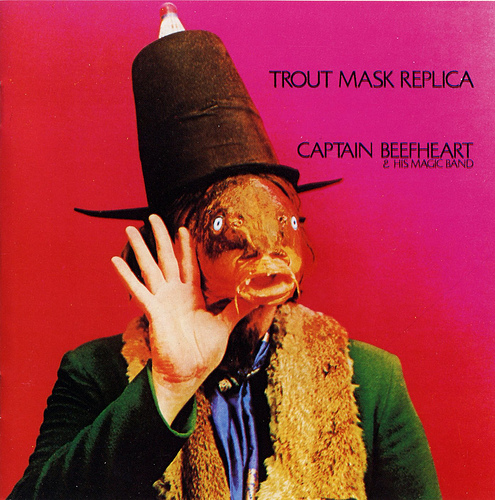
R.I.P. Captain Beefheart
Captain Beefheart died yesterday on the 17th of December 2010. He died at a Northern California Hospital of complications from multiple sclerosis.
His most well-known and influential album is "Trout Mask Replica" from 1969 recorded with his group "The Magic Band". It is a masterpiece of psychedelic rock with a lot of blues and free-form aspects. He was a formative figure for experimental rock music and well respected by the famous Frank Zappa. Rest in peace Captain.
Freitag, 17. Dezember 2010
John Zorn - Mycale
"Mycale" is a beauty of an album. In John Zorn's ouvré it holds a special place. Zorn rarely writes music for voice and "Frammenti Del Sappho" from the album "Mysterium" released in 2005 is one of the even fewer record pieces for voice only. It's a quite traditional madrigal with a beautiful harmonic structure. "Litany IV" from the 2007 release "Six Litanies for Heliogabalus" gave Mike Patton a solo spot. This was of course drastically different from Zorn's other voice only pieces but nevertheless the overall impression for many people in recent years was, that Zorn's becoming mellow and too melodic. His vocal only work was never heard over the course of a complete album and due to that didn't change opinions.
People thinking Zorn becomes tame are still proven wrong by the evolving Moonchild project, the great contemporary classical record "What thou wilt?" and the comeback of the file-card composition with "Femina", "Dictée/Liber Novus" and "Interzone" being some of Zorn's most interesting experimental records of the past decade.
Still some may continue to doubt Zorn's recent melodic work. The Dreamers and its many facets are a hit and miss affair for most. A lot of the Masada related music even more so.
Now there is "Mycale". It's both. It's beautiful and very melodic, it's based on Zorn's Masada music. Still it's experimental using different vocal techniques, sounds and even languages. It's a first for Zorn's A Cappella work and every first for Zorn after all these years putting out a few to many albums a year is worth examining.
Zorn records that intertwine beauty and experiments in the past decade tend to be best, when there's a certain feminity about them. "Femina" released in late 2009 was dedicated to women in contemporary arts and plain said important thinking women in the history of mankind.
"Mycale" seems to evoke all that and mix in more middle-eastern folk influences, instead of the classical approach of "Femina". Instead of lyrical string sections and percussive breakdowns and improvisations this set of A-Cappella pieces seems more human. "Femina's" approach wasn't any less sensual, but more intellectual challenging, more sophisticated. The beauty of "Mycale" speaks to your heart and soul, but it indeed speaks utilizing nothing but the human voice, where "Femina" drew images out of visions and dreams for you to interpret.
"Mycale" is a record full of passion and spirit. There are no prejudices, just the bare, naked emotions evoked through the beautiful sound of female voices. It's cosmopolitan music. It speaks French, Yiddish, Hebrew, Ladino and Arabic because you can't stick to just one language if you're mind is open and you want to reach everyone hearing this music. World music in the truest sense, accepting no borders in influences and languages utilized and celebrated.
Basya Schechter, Ayelet Rose Gottlieb, Malika Zarra and Sofia Rei Koutsovitis are the vocalists on this album and their performances are all outstanding. Without their down-to-earth teamwork "Mycale" would be good, but they deliver exactly that on every single track, making it a highlight of not just Zorn's 2010 releases but of this decade.
The only downside for some people might be the short duration of just 33 minutes. To everyone complaining about that I can only say one thing. Most musicians spent their whole career searching for the level of musicianship and beauty presented on "Mycale".
Cd time: 33:51
Personnel:
Ayelet Rose Gottlieb: Voice
Sofia Rei Koutsovitis: Voice
Basya Schechter: Voice
Malika Zarra: Voice
Ayelet Rose Gottlieb: Voice
Sofia Rei Koutsovitis: Voice
Basya Schechter: Voice
Malika Zarra: Voice
Standout tracks:
All of them. This record has an impressive flow that
shouldn't be disrupted.
Links:
Mycale on:
Mittwoch, 15. Dezember 2010
John Zorn @ Jazz In Marciac 2010 Video
If you need prove that "The Dreamers" are a totally different deal in concert, compared to their records..
Here it is:
Here it is:
John Zorn @ Jazz In Marciac 2010 from The Holy Filament on Vimeo.
Dienstag, 14. Dezember 2010
The Kilimanjaro Darkjazz Ensemble
The new Kilimanjaro Darkjazz Ensemble record will be fan-funded through pledgemusic.com. Their artist page is up and running and you're now able to pledge for their new album (which is like an early pre-order and gives you access to updates and samples of cover-artwork and music).
You can pledge here.
They are aiming for a March 2011 release.
You can pledge here.
They are aiming for a March 2011 release.
Jamie Saft - A Bag of Shells
Another tzadik release from 2010 is Jamie Saft's "A Bag of Shells". Saft is a multi-instrumentalist and producer, playing everything from Guitar and Bass to organ in John Zorn's "Electric Masada" and remixing David Gould's "Adonai & I" album. Quite a prolific guy. "A Bag of Shells" is a collection of Saft's soundtrack work, made for four documentaries. From "Murderball" to "God grew tired of us" these documentaries vary greatly in content and so does the music accompanying them.
The variety of genres represented here is quite insane. The "Murderball" theme is pounding groove metal, there are several short piano pieces, acoustic guitar ballads, a lot of middle eastern folk influenced pieces, even reggae and blues songs (both with a organ as lead instrument) and a jazz trio of piano, saxophone and contrabass are featured on this album.
With the exception of "Murderball" and "Brooklyn Exile (Theme)" all songs can be described as "easy listening" music. That said the musicianship here is great and it's not boring in any way. Still it's an album nearly without any edges.
What this album delivers is an overview over Jamie Saft's variety as a composer and a musician. Though it's not challenging the mixed order of the songs still gives the album a nice dynamic flow. Also worth noting are the guest spots. Highlights include Cyro Baptista, Erik Friedlander (accompanying Saft's piano on the beautiful, albeit short "Piano for the Masses" with his beautiful cello phrasing) and Shanir Ezra Blumenkranz from Rashanim. You won't hear any virtuoso statements here, these guys just deliver one thing:
Beautiful and fully enjoyable music.
"A Bag of Shells" is recommend for two kinds of listeners. The first being new to Jamie Saft's work and curious to get an overview over his output. The other being fans of his work and curious to hear new of his own compositions.
This record is mellow and soft, especially compared to his other records on Tzadik Records. Both "Breadcrumb Sins" and "Sovlanut" found him experimenting with electronic and noise music elements and combining these with middle-eastern vibes and jazz. "Black Shabbis" was a mixture of doom metal and middle-eastern folk music.
If you’re looking for experimentation and a healthy dose of craziness you'll be disappointed. (Except for "Brooklyn Exile (Theme)" which features an all out acoustic death metal piano blast beat fest) If you're comfortable with an album of just enjoyable tunes which work as great background music but still have enough musical substance to stand on their own, this is a record for you. Still this is a collection of some of Saft's nuances and I urge you to also experience this musician on his other records, playing out his aesthetics and strenghts on the full length of an concept album like "Sovlanut" or "Black Shabbis".
Personnel:
Cyro Baptista: Percussion
Shanir Ezra Blumenkranz: Oud
Erik Friedlander: Cello
Bobby Previte: Drums
Jamie Saft: Fender Rhodes, Synthesizers, Guitars, Bass, Organs, Mellotron, Wurlitzer Electric Piano, Piano, Drums, Percussion, Programming
Vin Cin: Bass
Bill McHenry: Saxophone
Dmitriy Shnaydman: Drums
Yacouba Sissoko: Kora
Standout tracks:
My Biggest Fear 4:27
Social Security 0:50
Piano for the Masses 1:10
Job Corps 1:27
Dezert Blues 4:25
Links:
Jamie Saft on:
last.fm
myspace
official website
on Tzadik Records
Montag, 6. Dezember 2010
Ned Rothenberg - Ryu Nashi/No School-New Music For Shakuhachi
Ned Rothenberg released two great albums on Tzadik Records in 2010. One being "Quintet for Clarinet and Strings" with the Mivos Quartet and himself playing clarinet. The other being "Ryu Nashi/No School-New Music For Shakuhachi".
"Ryu Nashi" is a concept album focussing on the traditions of the shakuhachi (a traditional Japanese bamboo flute) and some of Rothenberg’s own, unique views and techniques, making this record more than a traditional Japanese piece of music.
The album features five players. Riley Lee, Ralph Samuelson and Ned Rothenberg play a variety of shakuhachis, Stephanie Griffin plays viola and Yoko Hiraoka sings and plays Jiuta Shamisen. Ned Rothenberg plays two shakuhachi soli (track 1 "Emergent Vessel" and track 4 "Shadow Detail"). The other tracks are duets, fathoming the possibilities of the shakuhachi in combination with the viola, the shamisen and in a shakuhachi duet.
The recurring theme holding this record together conceptually and acoustically is obviously the shakuhachi. Its tonal expression is dominated by long, slowly changing tones. Hearing the three players on this album I can’t help myself but feel they are somehow more aware of what they play, than many other musicians. Here is no place to hide behind shredding a fretboard like a maniac. No filters, samples or overdubs to make your sound thicker and more polished. This music is pure, handcrafted and honest.
Overall the album is slow but nevertheless there’s a great sense of dynamic going on. Rothenberg uses space very knowingly and let’s the music breathe and float through the room. Players circle around each other more in a fashion of meditating together, than having a jazz like dialog. Then one instrument steps back, with the other instrument soloing more playful than before.
Regarding this careful pacing, "Dan No Tabi (Journey on a Staircase)" is the most dynamic song presented here. Fitting the title there are quite a few up and downs and the violin sometimes strives to dominate the song, tempting the shakuhachi to play some quicker and higher notes. The shakuhachi succeeds, increasing it’s range but never sounding frantic or hectic.
Rhytmically "Naki Tokoro Nite (Where there is neither)" is the most interesting song. Showing the experimental interests and of Ned Rothenberg, it doesn’t utilize the 2/4 meter of most traditional Japanese music. Instead Rothenberg uses the meter of the tanka poem(5-7-5-7-7), opening and closing the piece for most of the songs rhythmical structure.
Both "Naki Tokoro Nite" and "Dan No Tabi" use some traditional western elements, such as counterpoint composition. As traditional this record seems on the surface, it’s nevertheless an avant-garde perspective on an 1200 years old instrument.
Rothenberg is really lucky to have these highly talented players on this record. Knowing that, he uses their contributions to create a highly fascinating record with a lot of fine nuances. Despite the variety of Rothenberg’s compositional approach "Ryu Nashi" clearly shows his love and respect for the instrument.
If you’re even loosely interested in the shakuhachi or Japanese traditional music this record is highly recommened.
Cd time: 55:04
Personnel:
Riley Lee: Shakuhachi
Ned Rothenberg: Shakuhachi
Stephanie Griffin: Viola
Yoko Hiraoka: Jiuta Shamisen, Voice
Ralph Samuelson: Shakuhachi
Riley Lee: Shakuhachi
Ned Rothenberg: Shakuhachi
Stephanie Griffin: Viola
Yoko Hiraoka: Jiuta Shamisen, Voice
Ralph Samuelson: Shakuhachi
Standout tracks:
Cloud Hands 8:41
Links:
Ned Rothenberg:
Freitag, 3. Dezember 2010
El-P free track from Weareallgoingtoburninhellmegamixxx3 sessions
El-P leaked a track from the sessions to his recent album just a few hours ago via twitter. A download link can be found here. A relatively short track, albeit clearly showing why El-P is short for El-Producto. This is definetly beyond the borders of hip-hop and should be taken as what it is by everyone; good music.
And the title really is priceless: "Lab Rat Bravely Escapes On Hovercraft Only To Crash Directly Outside of Gates"
![]() |
| cover of Weareallgoingtoburninhellmegamixxx3 |
Death Ambient - Drunken Forest
A sound comes closer from the distance. Warmth swells around you. Water drips from the leaves just like the sweat from your face drips constantly. The walk through the forest lead you down a strange path you never took before. It sounds crazy but you can't stop but thinking that the forest around you breathes, moves, watches your every step. The humidity is overwhelmingly high. A haze of sound is audible but it’s hard to recognize any instrument you know.
The beauty of this place seems endless and so does your disorientation. As you look back over your shoulder you see the trees apparently grew together and build a massive wall. You have to move deeper and deeper into the Drunken Forest..
"Drunken Forest" is the collaborational band/project of Ikue Mori, Kato Hideki and Fred Frith. All 3 are quite profilic musicians of their own and quite busy. The tzadik site claims the creation of "Drunken Forest" took 6 years. After hearing this album over and over again since it’s release in 2007 I'm extremely glad they took enough time to come up with such an amazing album.
"Drunken Forest" is an ambient record in the truest sense of the word. This music evokes strong images and keeps flowing for it's entire duration (54:13). Moods are constantly changing, from the mist and dripping water of opening track "Lake Chad" to the more mellow but hazy tones of "Thermohaline" and the tragic hymn "River Tigris" sporting a great violin melody. "River Tigris" is also one of the few songs which features percussion performed by Jim Pugliese. He does a great job here in creating some of the more dynamic moments regarding tempo variation but still manages to stay in the mist of sound wafting around you, only serving the atmosphere.
Ikue Mori does what she does best. Squeezing sounds out of her laptop, based on her drummer and drummachine-manipulating past, which sound more organic and fluid than anything you'd associate with drums or laptops. She is a true master of sound manipulation and probably the most important improviser using a laptop as instrument of choice. Fluid soundscapes and rhythmic klicks and bleeps sound as if her laptop is a strange device making all of nature's true sounds audible instead of sounding like a machine.
Frith's performance might seem unimpressive compared to the sheer range of extended techniques, rhythms, melodies and sound experimentations of his solo guitar work. Nevertheless he's exactly the right guitarist for this album. Having explored so many techniques, genres and formats Frith is more aware of how to create soundscapes than any other guitar player on this planet. It would be easy to screw this record up by unneccessary soloing and showing off technically. But Frith steps back, letting every melody or sound evolve slowly, with great patience and sense for pacing.
Kato Hideki is the one giving this record a great sense of melody and beauty which isn't present in a whole bunch of avant-garde music. He plays an insane amount of instruments here (tzadik lists Acoustic And Electric Bass, Acoustic Guitar, Analog Synthesizer, Violin, Banjo, Mandolin, Accordion, Ukelele, Electric And Lap Steel Guitar, Vocals, Soprano And Alto Recorder, Glasses, Ice And Water and I’m pretty sure he plays Shakuhachi also. Though it could be sampled.). Most of his melodies sound like sketches of something bigger. Little fragments of melody, recalling traditional japanese music are filtered until they become a part of this surreal piece of music. It is not until "River Tigris" when you realize this music really has a monumental quality once the thickness of sound is lifted for a short, majestic moment. But still you can't help but admit this was in the music from the very beginning
Use of melody is sparse though every song is melodic. The pacing is just very slow. But believe me it is incredibly effective and will take you on a trip right into the mirrors of your mind. The music is full of warmth and mysteries to unravel like a documentation on japanese bamboo forests directed by Salvador Dalí. Just imagine that put into music. If you like atmospheric music to the slightest degree you need to hear this album. It's a masterpiece. My personal favourite record of 2007.
I suggest experiencing this record via a good stereo system in a dimly lit room or with good stereo headphones. Everything else won't do it justice.
Cd time: 54:13
Personnel:
Fred Frith: Electric Guitar
Ikue Mori: Laptop Computer
Kato Hideki: Acoustic And Electric Bass, Acoustic Guitar, Analog Synthesizer, Violin, Banjo, Mandolin, Accordion, Ukelele, Electric And Lap Steel Guitar, Vocals, Soprano And Alto Recorder, Glasses, Ice And Water
Special Guest
Jim Pugliese: Percussion
Fred Frith: Electric Guitar
Ikue Mori: Laptop Computer
Kato Hideki: Acoustic And Electric Bass, Acoustic Guitar, Analog Synthesizer, Violin, Banjo, Mandolin, Accordion, Ukelele, Electric And Lap Steel Guitar, Vocals, Soprano And Alto Recorder, Glasses, Ice And Water
Special Guest
Jim Pugliese: Percussion
Standout tracks:
Lake Chad 4:45
River Tigris 3:59
Drunken Forest 6:02
Coral Necropolis 6:46
Links:
Death Ambient:
Labels:
2007,
ambient,
atmospheric,
avant-garde,
Death Ambient,
electronic,
extended instrument techniques,
Fred Frith,
guitar,
Ikue Mori,
Japan,
Kato Hideki,
New Japan,
review,
soundscapes,
tzadik
Donnerstag, 2. Dezember 2010
Rashanim - The Gathering
2009 saw the release of this impressive all acoustic record from Rashanim. The usual brand of “instrumental-world-music-surf-folk-klezmer-rock” they usually play isn’t heavily distorted anyway. Still this set of unplugged pieces reaches an intensity not found on their previous recordings. (That said, these also range from good to excellent but don't seem as focussed)
Stylistically Rashanim take you from the fast flamenco vibe of the opening track “Judges” to acoustic rock interludes (for example the 1:57 long “Elijah’s Chariot”), guitar ballads and the slow motion “doom” country of Deborah. What unifies all of these songs is a sparse use of motifs. One or two per song, some subtle soloing here and there and you get a record focused on creating a dense atmosphere instead of virtuosic but meaningless wanking. Repetition and variation of themes is a concept you’ll find in every song on this record on a level so high, it never gets boring or actually feels repetitive.
There’s not a single guest spot on this album. Nevertheless you’ll hear a lot more than just guitar, bass and drums. Bandleader Jon Madof occasionally pulls out a banjo and drummer Mathias Kunzli adds cowbells, plays his drum set a few times with brushes and even plays Jaw Harp. But the versatility of Shanir Blumenkranz shines even more on this record. Playing all kinds of stringed instruments (Acoustic Bass Guitar, Bass Banjo, Tiple and Chonguri) isn’t enough. He even pulls out a Glockenspiel and a Melodica. Not to mention that all 3 bandmembers create a haunting flair with beautiful chanted melodies on the closing tracks Jeremiah and Joshua.
Even though moods and styles vary the whole albums feels very homogenous. Probably due to the small number of musicians involved. Probably due to Jon Madof’s skills as a composer. I’d say both factors make for the stunning result. There’s a huge sense of discipline and effective use of sound present on this album. This sometimes reminds me (positively) of Ennio Morricone’s work. That said Rashanim definetly have a sound of their own that sounds very honest and passionate.
Every song seems to be a short story told to you while sitting near a campfire. (The album artwork really suits the music here!) Mythical images will occur in your mind. Images of nature and a clear night sky. Remembering things you’ve longed for since a long time ago. A definite amount of melancholy is contained in these melodies and performances. But after all stories are told “Joshua”s finale with those haunting chants will assure you, it’s sweet melancholy. And you’ll most likely press repeat to re-experience that journey.
Cd time: 47:54
Personnel:
Shanir Ezra Blumenkranz: Acoutic Bass Guitar, Bass Banjo, Glockenspiel, Melodica, Tiple, Chonguri, Vocals
Mathias Kunzli: Drums, Percussion, Jaw Harp, Whistling, Vocals
Jon Madof: Guitars, Banjo, Vocals
Shanir Ezra Blumenkranz: Acoutic Bass Guitar, Bass Banjo, Glockenspiel, Melodica, Tiple, Chonguri, Vocals
Mathias Kunzli: Drums, Percussion, Jaw Harp, Whistling, Vocals
Jon Madof: Guitars, Banjo, Vocals
Standout tracks:
Kings 5:44
Ezekiel 3:50
Amos 5:01
Jeremiah 4:27
Joshua 5:28
Links:
Rashanim:
Labels:
2009,
acoustic,
atmospheric,
banjo,
country,
Ennio Morricone,
flamenco,
folk,
guitar,
instrumental,
Jon Madof,
Mathias Kunzli,
melancholic,
middle-eastern,
Radical Jewish Culture,
Rashanim,
review,
rock,
Shanir Ezra Blumenkranz,
tzadik
Mittwoch, 1. Dezember 2010
Makigami Koichi - Tokyo Taiga
Makigami Koichi’s latest release from 2010 is one impressive meditation. The theater actor, theremin player and throat-singer is joined here by 3 russian/mongolian folk musicians (playing everything from percussion and cello to traditional Mongolian instruments). The result ranges from shorter tracks which feature a lot of improvisation and longer tracks with extremely dense atmospheres.
The cd contains 11 tracks and clocks in at a nice 52 minutes which gives you a good value for your money.
All player’s contributions are used in a way reminding me of a painter using brush strokes to paint a landscape. A bleak and cold landscape where nature’s great power shows more evidently than in today’s big cities. That said there’s something quite romantic about the loneliness and bleakness of this music. You’re taking a walk in the icy tundra and your limbs might freeze but sometimes it’s good to be alone with your thoughts, instead of being overwhelmed by information.
A highlight of my on release purchases this year and now that winter breaks loose it’s even better. Highly recommend for snowy landscapes and lonely evenings. I’d also recommend stereo headphones but this music is clearly supposed to float through a room and fill it with it’s images. You’ll feel a romantic isolation even without headphones before the first song ends.
Cd time: 52:09
Personnel:
Makigami Koichi: Vocals, Cornet, Theremin, Slide Kubiz
Bolot Bairyshev: Vocals, Altai Traditional Kai, Topshuur, Shoor, Khomus
Sato Masaharu: Percussion, Khaen, Voice
Shika Udai: Cello
Standout tracks:
Tundra 13:02
Yume (Dream) 7:22
Tokyo Taiga 4:52
Links:
Makigami Koichi:
on last.fm
official website
on Tzadik records
Myspace Page
Makigami Koichi: Vocals, Cornet, Theremin, Slide Kubiz
Bolot Bairyshev: Vocals, Altai Traditional Kai, Topshuur, Shoor, Khomus
Sato Masaharu: Percussion, Khaen, Voice
Shika Udai: Cello
Standout tracks:
Tundra 13:02
Yume (Dream) 7:22
Tokyo Taiga 4:52
Links:
Makigami Koichi:
on last.fm
official website
on Tzadik records
Myspace Page
Labels:
2010,
atmospheric,
avant-garde,
bleak,
cello,
contemporary,
extended vocal techniques,
folk,
Japan,
Makigami Koichi,
Mongolia,
New Japan,
review,
soundscapes,
theremin,
throat-singing,
trumpet,
tzadik
You spend money on CDs? Really?
Yes indeed. And I should spend more money on supporting my favourite artists, but before I'll crack the jackpot in Vegas things will continue in a slow pace.
I created this blog mainly to archive my own purchases with some thoughts about the music and concepts. I'll mainly add and "review" CDs from John Zorn's "Tzadik" label. (visit www.tzadik.com) I think that label is a refugium for a lot of great artists whose music still expands and bends the possibilities of performance and composition instead of endlessly repeating old traditions. They deserve promotion and indeed CD purchases.
That said I'll probably add other media-related reviews also.
I created this blog mainly to archive my own purchases with some thoughts about the music and concepts. I'll mainly add and "review" CDs from John Zorn's "Tzadik" label. (visit www.tzadik.com) I think that label is a refugium for a lot of great artists whose music still expands and bends the possibilities of performance and composition instead of endlessly repeating old traditions. They deserve promotion and indeed CD purchases.
That said I'll probably add other media-related reviews also.
Abonnieren
Posts (Atom)